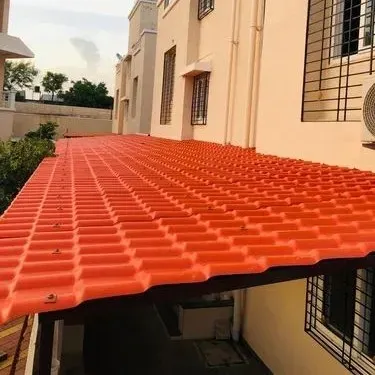
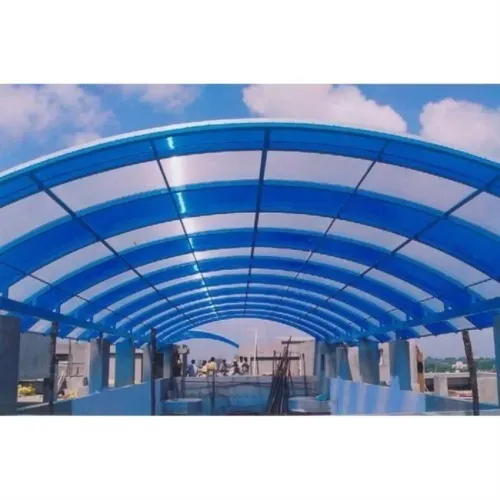
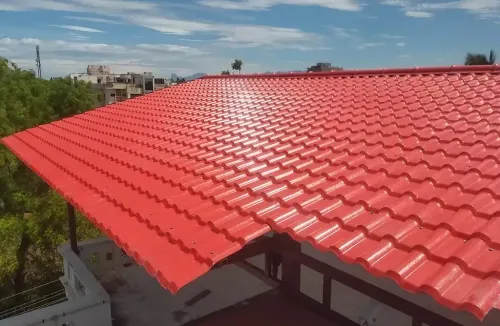
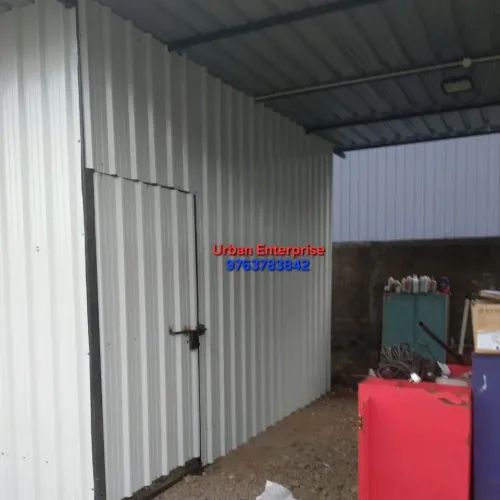
*UPVC shed* uses Unplasticized Polyvinyl Chloride sheets/panels for roofing and walling instead of metal GI sheets. It’s a lightweight, rust-proof option for specific uses.
*1. What is a UPVC Shed?*
A shed where the *roof and/or wall cladding is UPVC* instead of metal. The structure/frame is still MS or GI pipe/PEB - only the covering material changes.
*UPVC sheets*: 2mm–3mm thick, corrugated or trapezoidal profile like GI sheets. Co-extruded with UV protection layer.
*2. Key Features of UPVC vs MS/GI Shed*
*Advantages*
- *No rust/corrosion*: Best for chemical plants, fertilizer godowns, poultry farms, coastal areas. GI sheets rust in 3–5 years here, UPVC lasts 15–20 years.
- *Heat insulation*: UPVC is 3x better insulator than metal. Inside temp 4–6°C cooler. No need for separate insulation in many cases.
- *Sound insulation*: Rain noise is 60% less than GI sheet. Good for offices, farmhouses.
- *Chemical resistant*: No reaction to acids, alkalis, salt spray. Used in pharma, dyeing, plating units.
- *Lightweight*: 4–5 kg/m² vs 5–6 kg/m² for GI. Less load on structure.
- *Maintenance free*: No painting. Color is throughout the sheet.
*Disadvantages*
- *Lower strength*: Can’t take point loads. Don’t walk on roof. Not for EOT cranes or solar panels without extra purlins.
- *Fire*: UPVC is self-extinguishing but deforms at 80°C+. Not for high heat areas like furnace sheds.
- *Cost*: ₹110–₹160/sq ft for 2.5–3mm sheet vs ₹55–₹85/sq ft for 0.5mm GI. Structure cost same.
- *Thermal expansion*: Expands more than metal. Needs proper oval holes + washer for fixing, else cracks.
*3. Construction Specs*
- *Frame*: Same MS pipe/PEB as regular shed. But purlin spacing closer - 1.0m to 1.2m max vs 1.35–1.5m for GI, because UPVC is flexible.
- *Sheet thickness*:
- *2mm*: For
Keywords